
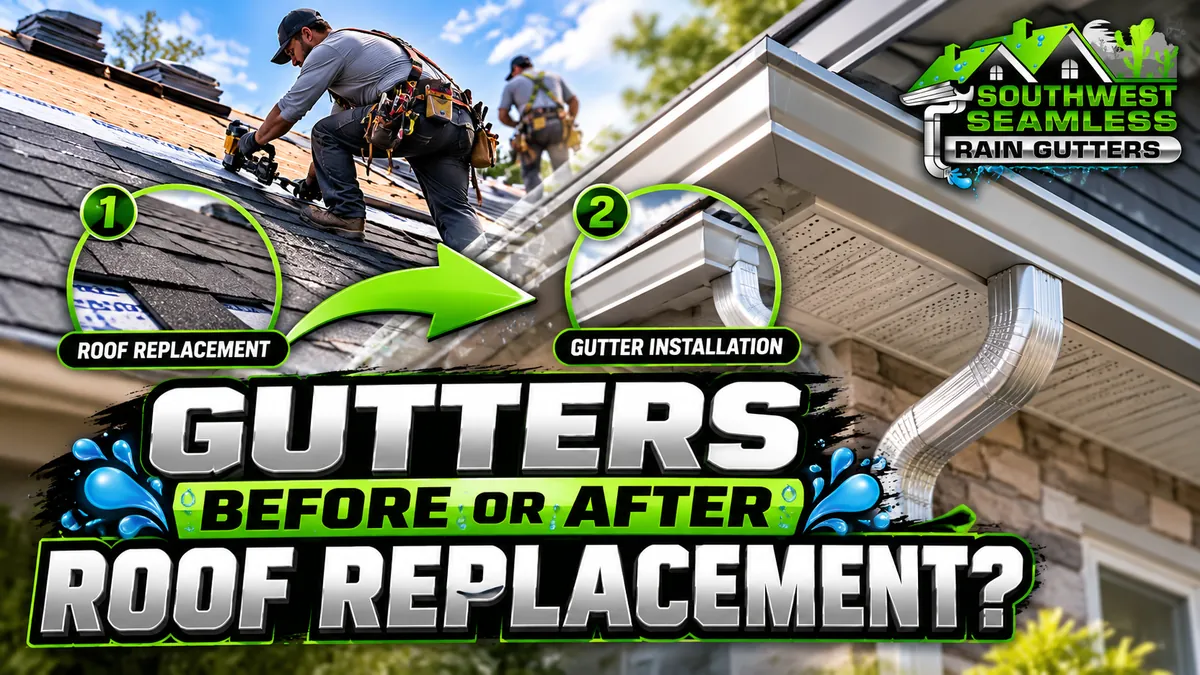
If you are planning both a new roof and new gutters, the usual order is straightforward: complete the roof replacement first, then install the gutters. This helps protect new gutters from damage and gives the roofing crew better access to the roof edge, fascia, and drip edge. However, existing gutters do not always need to be replaced or removed. Their condition and placement matter. Understanding whether to install gutters before or after roof replacement can help you coordinate both projects, avoid unnecessary work, and make sure the finished roof and drainage system function together properly.
Should Gutters Be Installed Before or After a Roof Replacement?
Quick answer: In most cases, gutters should be installed after the roof replacement is complete. Roofing work often involves removing old materials, working around the eaves, installing or adjusting drip edge, and positioning ladders around the home. New gutters installed first may be scratched, bent, loosened, or damaged during this work.
Completing the roof first also makes it easier to inspect the fascia and roof edge before the gutter system is attached. If repairs are needed, they can be handled without removing newly installed gutters.
That does not mean every roof replacement requires new gutters. If the current system is secure, properly pitched, and in good condition, it may be able to remain in place.
Why Gutter Installation After Roof Replacement Usually Works Best
Choosing gutter installation after roof replacement creates a cleaner sequence for both projects.
New Gutters Are Better Protected
Roof replacement involves activity around the perimeter of the roof. Old materials are removed, flashing and underlayment may need attention, and crews need access to the eaves. Installing gutters afterward reduces the chance of accidental damage.
Roofers Have Better Access to the Roof Edge
The roof edge is where roofing materials, drip edge, fascia, and gutters meet. With gutters out of the way, contractors can inspect and complete this area more easily before the gutter installation begins.
Fascia Repairs Can Be Completed First
Gutters are often attached to the fascia board. If the fascia is deteriorated or damaged, it should be repaired before new gutters are mounted. Replacing the roof first gives contractors a better opportunity to identify and address those problems.
Do Gutters Need to Be Removed for Roof Replacement?
Not always. Whether gutters need to be removed for roof replacement depends on their condition, attachment, and whether they interfere with access to the roof edge.
Existing gutters may stay in place when they are secure and do not block the work. In other cases, temporary removal may make the roofing project easier.
Removal may be recommended when:
- The gutters are damaged, sagging, or pulling away from the fascia.
- The gutter system blocks access to roofing materials or the drip edge.
- The fascia needs repair or replacement.
- The gutter position makes roof-edge work difficult.
- Gutter replacement is already planned as part of the project.
This should be decided before roofing begins so the roof and gutter work can be scheduled in the right order.
Should Gutters Be Replaced With the Roof?
You do not automatically need to replace gutters when replacing a roof. Roofs and gutters are separate systems, and their condition should be evaluated separately.
Replacing both can make sense if the gutters are leaking, sagging, separating at joints, pulling away from the fascia, or failing to direct water properly. It may also be practical if fascia repairs are required during the roof replacement.
If the existing gutters are still secure and functioning correctly, keeping them may be reasonable. The main goal is to make sure the roof and gutter system work together after the roofing project is finished.
When Is the Best Time to Install Gutters After a New Roof?
The best time to install gutters is after the new roof and any necessary fascia or roof-edge work are complete. The gutter installer can then work with the final roof edge and drip-edge configuration.
This sequence also helps the installer position the gutters correctly so water leaving the roof is directed into the gutter system rather than behind it.
If the roof replacement changes the fascia, drip edge, or edge profile, wait until those details are finished before final gutter measurements and installation.
What Can Happen If Gutters Are Installed Before Roof Replacement?
Installing gutters before roof replacement is possible, but it is usually less practical. The roofing crew may still need to work directly above or around the new gutters.
Potential issues include:
- Dents or scratches from ladders, tools, or removed roofing materials.
- Extra labor if gutters must be loosened or removed.
- Reduced access to fascia and drip-edge areas.
- More difficulty completing roof-edge repairs.
- A need to adjust gutter alignment after the new roof is finished.
If scheduling requires gutter installation before roof replacement, tell the roofing contractor beforehand so the crew can plan around the new system.
How to Coordinate Roof and Gutter Replacement
When both projects are planned close together, confirm who is responsible for gutter removal, fascia repairs, reinstallation, and final gutter installation.
Before work begins, clarify:
- Whether the existing gutters will stay, be removed temporarily, or be replaced.
- Whether fascia repairs are expected.
- How the drip edge will be installed or adjusted.
- When final gutter measurements should be taken.
- Whether downspout locations will stay the same.
Clear coordination can reduce delays and prevent one crew from having to undo another crew's work.
Conclusion
For most projects, the best answer to gutters before or after roof replacement is to complete the roof first and install the gutters afterward. This order protects the gutter system, gives roofers better access to the roof edge, and allows fascia or drip-edge work to be completed without interference. Existing gutters may remain if they are in good condition and do not obstruct the roofing work. Coordinating both projects before work begins can help create a smoother installation process and a roof drainage system that functions as intended.