Summerlin isn't on the valley floor — and that changes everything about how its homes should be guttered. The community climbs the alluvial fans of the Spring Mountains to roughly 3,000–3,100 feet of elevation, high enough that summers run cooler than the central valley and the foothills pull noticeably more rain out of passing storms. When a monsoon cell stalls against Red Rock, the water that falls on Summerlin rooftops starts moving immediately, because almost every lot here sits on a grade.
That slope is the difference-maker. On flat valley lots, unguttered roof runoff pools; in Summerlin, it travels — down driveways, across pool decks, through the desert landscaping and paver hardscape the villages are known for. A correctly sized seamless system catches the roof's share at the eave and delivers it to the street drainage before it can carve channels through rock mulch or undermine a paver walk.
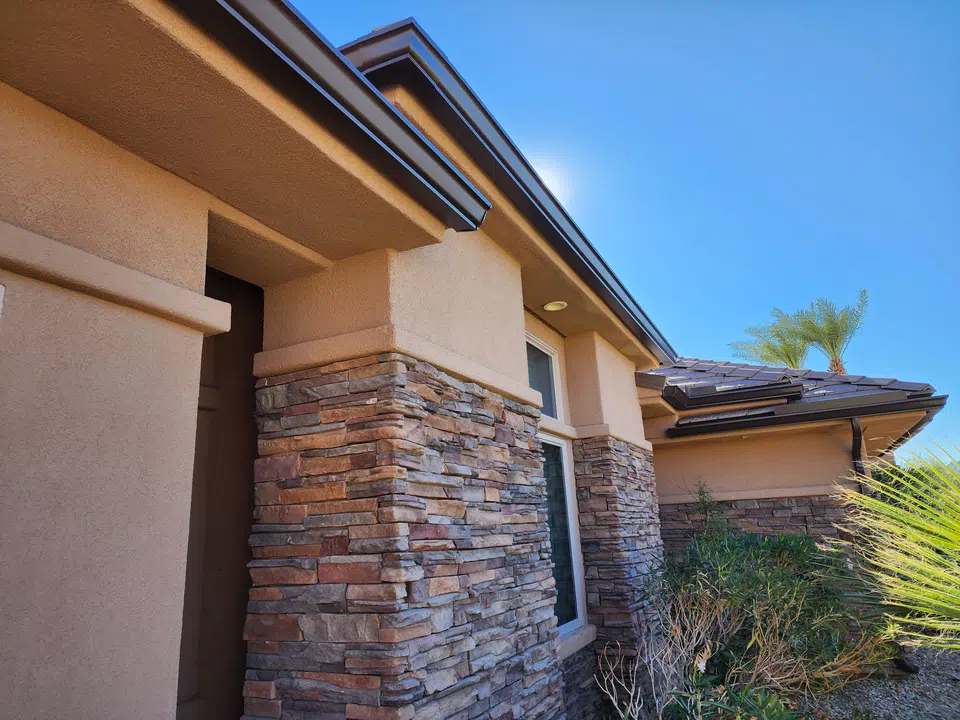
The other thing that makes Summerlin different is design review. Most villages have architectural standards and HOA review for exterior changes, which means gutter color and profile aren't afterthoughts — they're requirements. We form 5" and 6" K-style gutters on site in genuine .032 aluminum and match from 50+ factory colors, so the system disappears into the trim line instead of fighting it. We've worked across the master plan, from the established parkways to the newer villages still building toward the mountains.
It's also a community built around its outdoor spaces — 200-plus miles of trails, parks in every village, and yards finished in pavers and desert rock rather than lawn. Gutters here protect more than stucco: they keep roof runoff from washing out the hardscape investment that makes a Summerlin lot a Summerlin lot.