FAQ
Queen Creek Routing Questions
How is downspout work priced in Queen Creek?
Routing work prices from one itemized on-site measurement — per drop, extension, re-aim, or leaderhead — $400 minimum stated up front, whole parcels on one sheet, the corridor rules explained free where they apply.
What materials do you use for downspout work in Queen Creek?
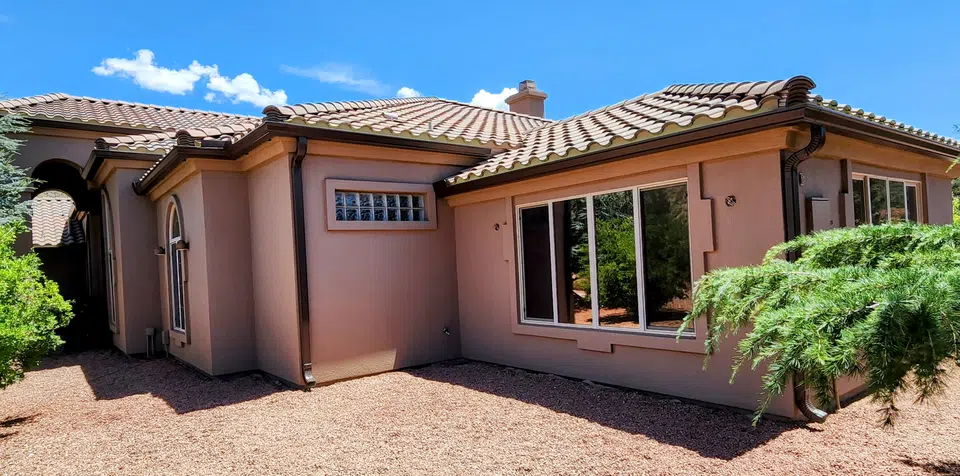
Drops and leaderheads in aluminum matched to your runs, copper where a rare estate composition earns the visible craft, and galvanized on the barns and working structures — carried with its standing footnote, since zinc coats wear and worn galvanized can rust.
How fast is storm response for downspout work?
Same-week in season — with wash-aimed discharge and gate-approach flooding read fast, since one involves water that isn't yours and the other lands where the property works.
What sizes and profiles does the work cover?
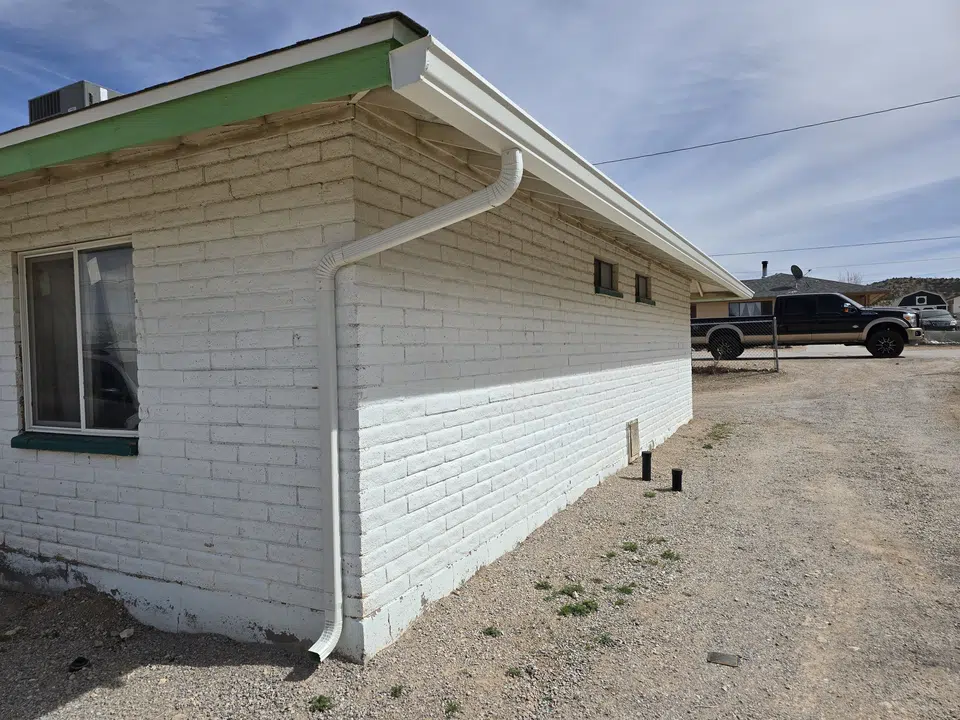
Downspouts sized to the run and plane feeding them — standard and oversized profiles, upsized wherever symmetry habits shorted the math, barn planes counted at their true footage.
What warranty applies to this service?
The workmanship on this service is warrantied for 2 years; where genuine .032 aluminum goes up, the metal adds its own manufacturer-backed lifetime material warranty.
How long does downspout work usually take?
Most routing visits finish in one visit — completions run, aims corrected, leaderheads mounted, the parcel's traffic dry by evening.
How do I know my home in Queen Creek needs this?
If water pools at a slab, lands on the gate approach, aims at a wash, or never reaches the street — yes. In the namesake town, half the diagnosis is naming whose water goes where; the rest is pattern work.
Why does downspout work matter for monsoon season?
The season runs both scales at once — the corridors carrying the region's share while the streets and basins take the neighborhoods'. Completed deliveries and working-ground placement keep your parcel on the right side of both.
Do you take on new-construction projects?
The growing sections get deliveries aimed at their engineered paths from the plat — and corridor-bordering parcels get the setback conversation before the first drop is placed.
Do you service systems you didn't install?
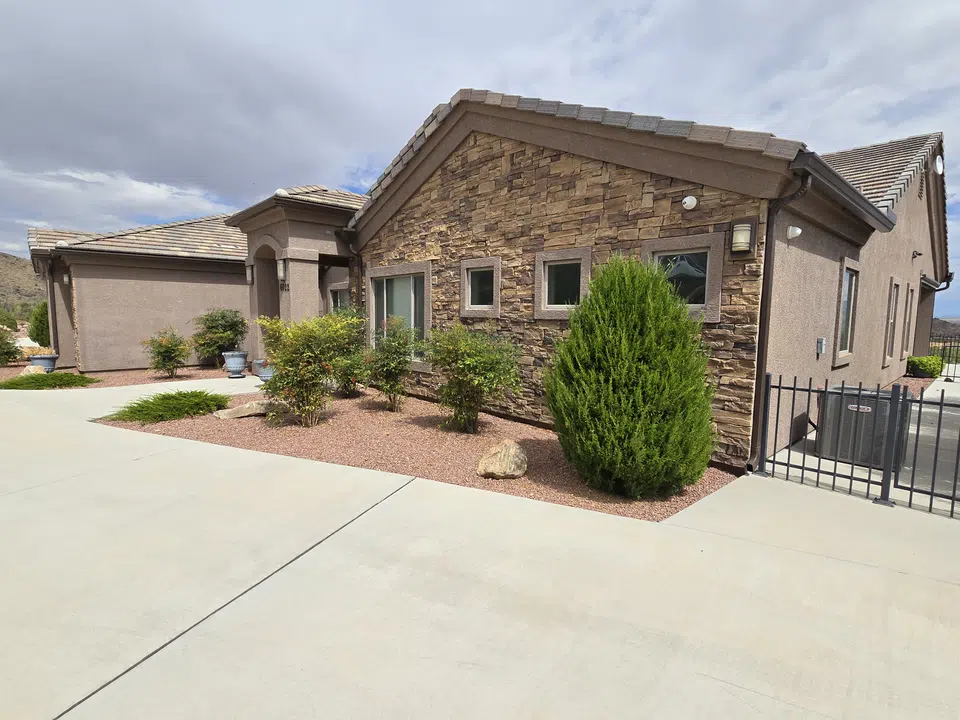
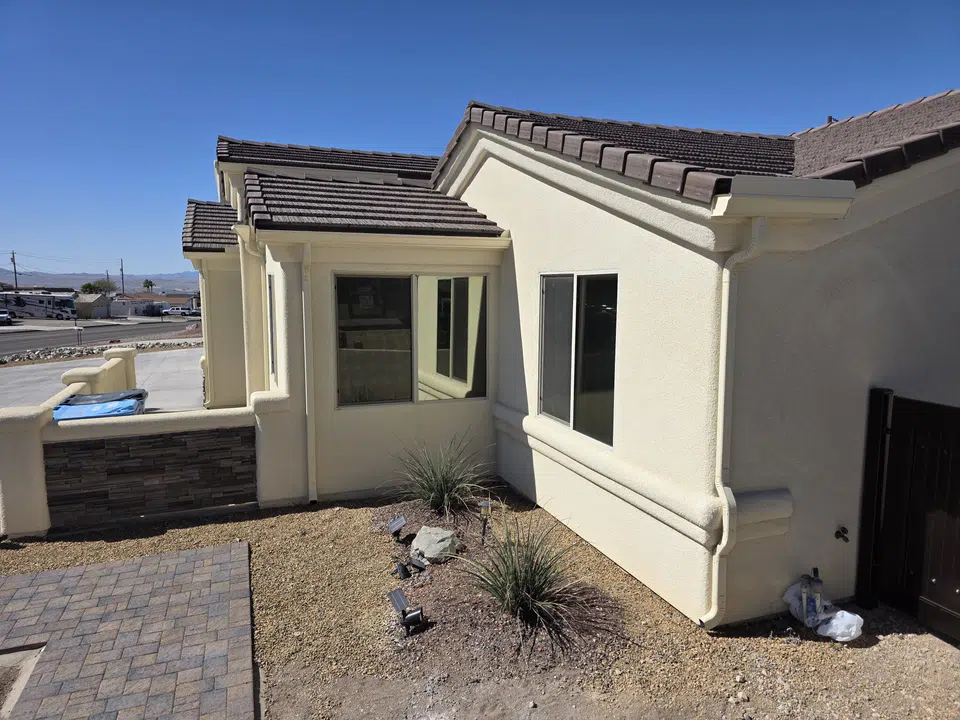
One visit covers the hardware side — flattened drops straightened or replaced, elbows re-seated, straps renewed — and every fix gets checked against the parcel's actual flow before we leave, because out here a straightened drop that still lands on the gate approach only solved half the call.
The town's literally named after a creek — does that mean flooding is just baked into living here?
It means the opposite, mostly: a town named for its watercourse has spent its whole modern life engineering around it. The namesake wash and Sonoqui run as managed corridors — graded, maintained, and governed precisely so the big water has somewhere to be during the big storms — and the subdivisions were platted with street-and-basin systems to handle the neighborhood share. What the name should change is your awareness, not your anxiety: know where the corridor ground begins if you border it, keep private discharge out of it, and make sure your own deliveries actually finish their trip to the street. A house whose roof water completes the plan it was engineered for isn't fighting the namesake — it's participating in the same idea the town was named after: water, given a proper place to go.
What licensing covers this work in Arizona?
Yes: AZROC #346705 covers this work in Arizona, we're also licensed in Nevada (NVLIC #0093742), and we carry full insurance — the paperwork is available with any estimate.
Do you handle the corridor-adjacent lots and the horse properties alike?
Alike and often together: the wash-side rules, the acre lots' whole-parcel placements, the masterplans' completions, and the growing sections' plat-true aims — one standard, every parcel type.