FAQ
Peoria Installation Questions
How is gutter installation priced in Peoria?
Installation prices from a free on-site measurement — footage, corners, outlets, terrain factors, and finish itemized before work begins, with the $400 minimum stated up front.
What materials do you use for gutter installation in Peoria?
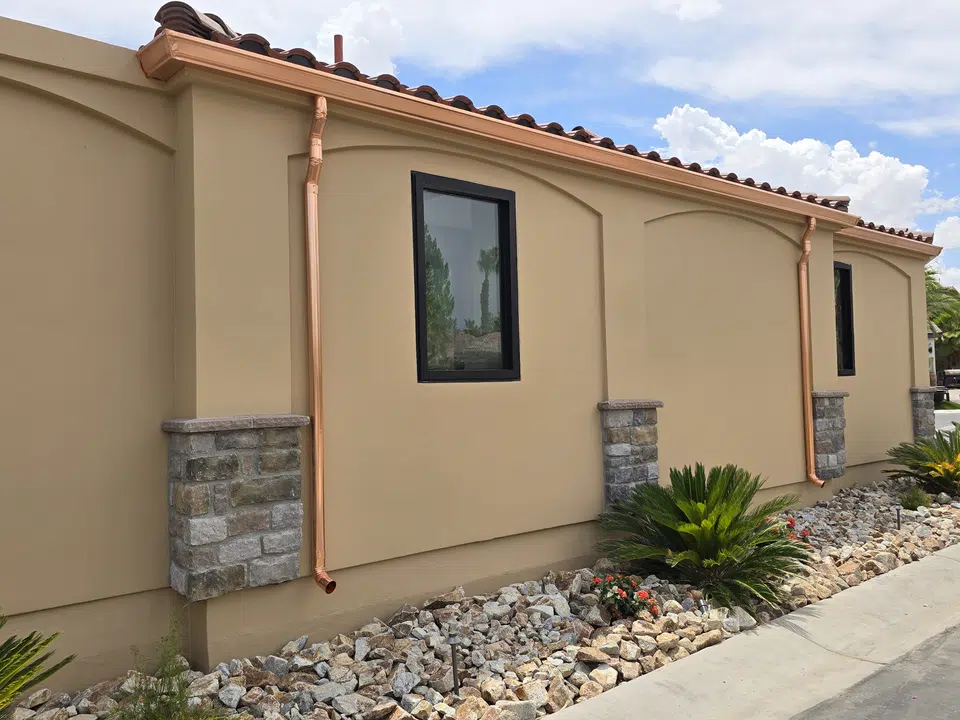
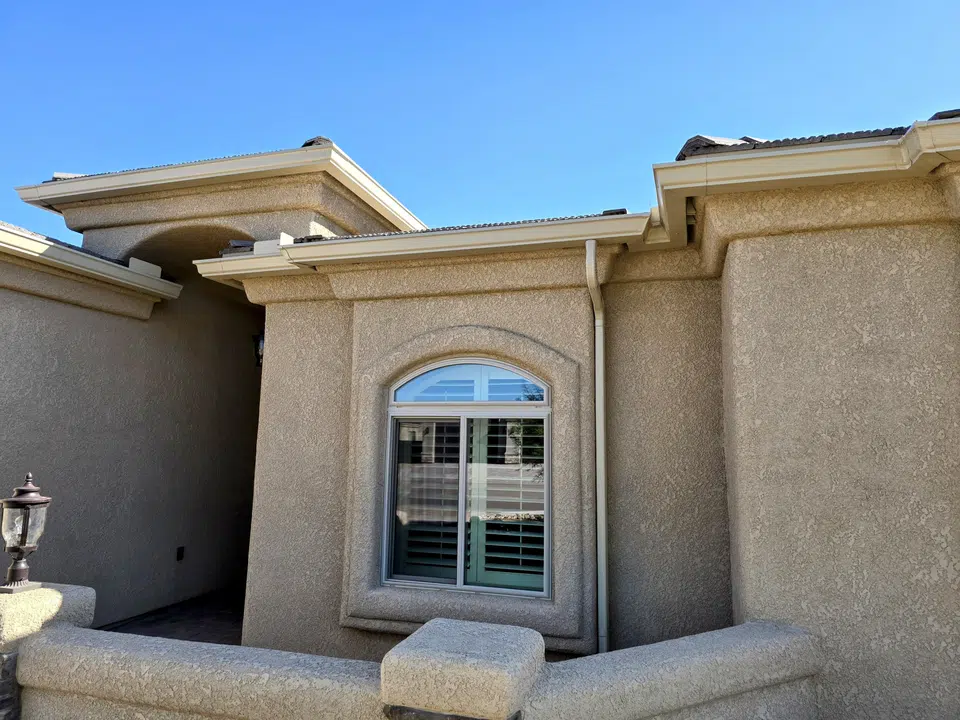
Genuine .032 aluminum carries the gradient — rust resistant, lifetime material warranty, fifty-plus factory finishes from desert neutrals to the belt's coordinated palettes. Copper serves the view-lot customs; galvanized suits the working buildings, noted honestly that it can rust as its zinc wears.
How fast is storm response for gutter installation?
Storm-damage installs hold same-week priority June 15 through September 30 — with foothill calls read fast, since water on grade compounds while it waits.
What sizes and profiles does the work cover?
Seamless 5-inch and 6-inch K-style — the grid's single-stories mostly install right on exactly pitched 5-inch, while the foothill customs and two-story planes earn the 6 by measurement.
What warranty applies to this service?
The workmanship on this service is warrantied for 2 years; where genuine .032 aluminum goes up, the metal adds its own manufacturer-backed lifetime material warranty.
How long does gutter installation usually take?
A day for nearly every home — including the foothill version, where the extra time lives in the planning walk rather than the hanging.
How do I know my home in Peoria needs this?
By which Peoria you're in: the established grid's originals are closing out, the foothill lots need systems planned for grade and exposure, and the growth corridors' newest planes shipped with the era's usual gaps.
Why does gutter installation matter for monsoon season?
The season works both terrains its own way — flat-grid capacity gaps and foothill runoff concentration. Installs get sized to the actual roof, secured for the elevation, and discharged with the ground's slope in the plan.
Do you take on new-construction projects?
Yes — the north corridors are live first-install country, and systems set before a section's first monsoon cost what they cost after, minus the stucco lesson the bare year teaches.
Do you service systems you didn't install?
Where the measurement finds metal honestly worth keeping, that's the recommendation — installation is the answer when the era or the terrain has finished the argument, and the ladder shows which. Full gutter replacement, when the terrain read calls it, closes flat-grid homes in a day and foothill lots on the walked plan.
We're buying into a 55+ community here — is there a 'right' gutter spec for downsizing?
There is, and it's refreshingly specific: the decision-once spec. It means sizing generously enough that capacity is never revisited, hanging on a fastener schedule that shrugs off the decades, choosing finishes from your community's coordinated palette so approvals are a formality, designing the maintenance out — honest guard verdicts included — and papering the warranty so the file outlives the questions. Downsizing is about subtracting future chores; the right install here is the one that takes gutters off your list permanently, not the one that wins on install-day price and returns as a ladder problem at eighty.
What licensing covers this work in Arizona?
Yes: AZROC #346705 covers this work in Arizona, we're also licensed in Nevada (NVLIC #0093742), and we carry full insurance — the paperwork is available with any estimate.
Do you install in the foothill sections and the established grid alike?
Yes — the whole gradient: the south grid's successions, the foothill lots' walked-and-planned installs, the belt's decision-once systems, and the growth corridors' first sets. Rolled continuous at the address, every elevation.